EFFICIENT THERMOFORMING

A new generation of tooling, powered by Shared-Edge-Thermoforming.
Bigger output, lower waste, reduced environmental impact.
Bigger output, lower waste, reduced environmental impact.
Shared-Edge-Thermoforming
GravoLAB is recognised across the thermoforming industry as the pioneer of a new generation of tooling that takes a completely different approach to reducing scrap, while delivering high speeds and excellent cutting tolerance. This tooling is designed for radiant-heat machines, in both In-Mold-Cut and Form-Cut-Stack configurations. We call the technology Shared-Edge-Thermoforming, and it brings greater efficiency than conventional tooling. For over 22 years, GravoLAB has produced some of the world’s most efficient thermoforming tools for single-use plastic packaging. Everything we do is focused on reducing raw-material use for the same output — and all around the world, our tooling makes a difference every day, producing packaging more responsibly.


…wondering what Shared-Edge-Thermoforming is?
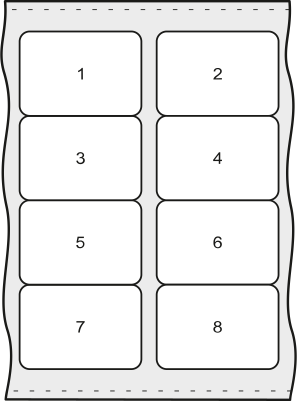
The idea of joining thermoformed plastic parts with a shared edge during manufacturing is not entirely new — it was introduced years ago for tools running on contact-heat technology, where the plastic sheet is heated by direct contact with a cutting plate. Shared edge is widely used across many industries as a simple way to reduce raw-material use. Shared-Edge-Thermoforming means that two adjacent parts with straight sides are no longer separated by a web, as on a conventional tool, but are connected during the thermoforming process. The aim is to shrink the web to zero — and with it the material used. On tools running on radiant-heat machines this is far harder: greater complexity, limited cooling in tighter spaces, less mechanical support against extreme cutting forces, and the need for stability across tens of millions of cycles — to the point where Shared-Edge-Thermoforming seems impossible.
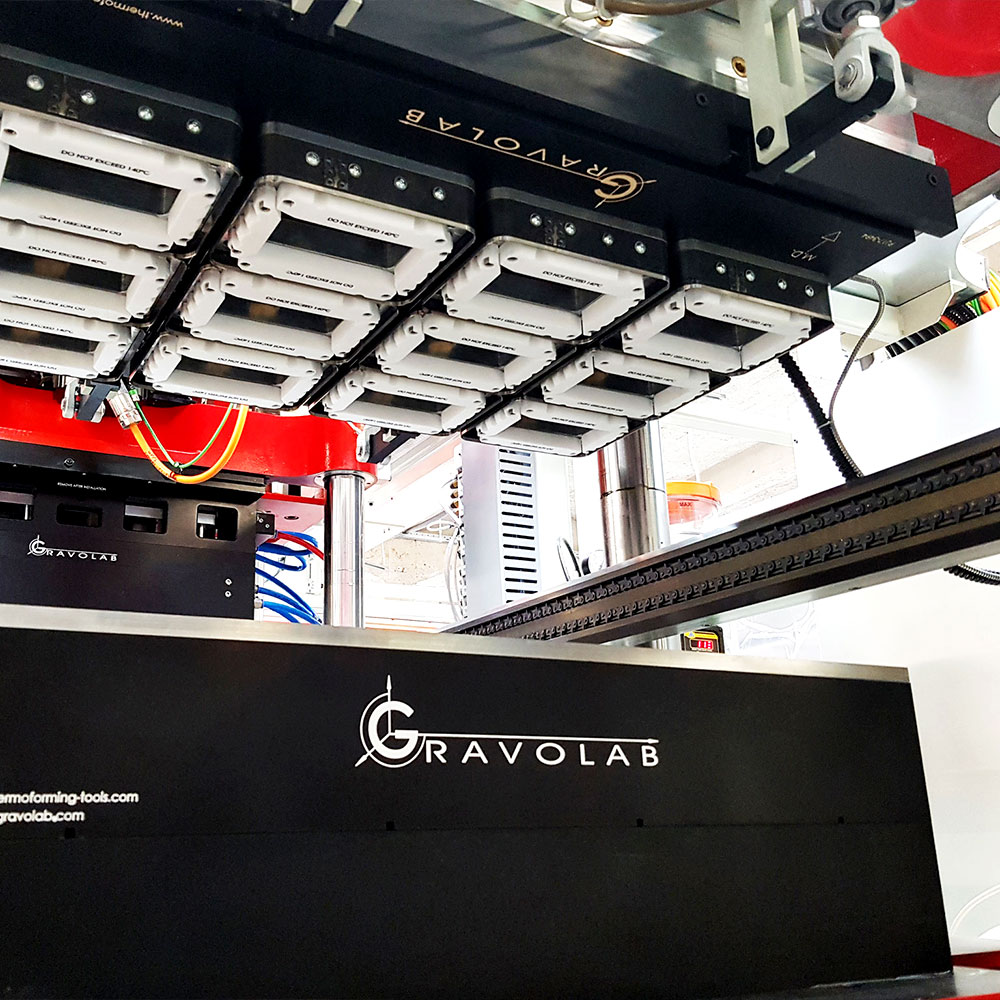


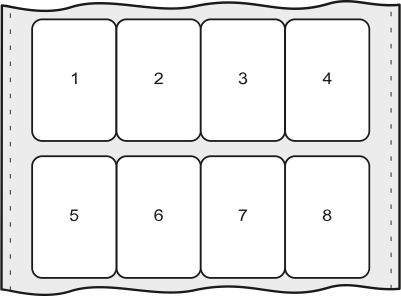
We've made efficient thermoforming possible.
GravoLAB has made it universal and accessible for tools running on radiant-heat thermoforming machines with chain-driven sheet. Whether Form-Cut-Stack or In-Mold-Cut, these molds now deliver more output and less scrap. Our patented technology is simple, reliable and proven in production around the world. Compared with a conventional tool, waste material can be cut by half — helping you reduce your CO2 footprint and protect the environment.